Nitinol Guide Pins Descriptions
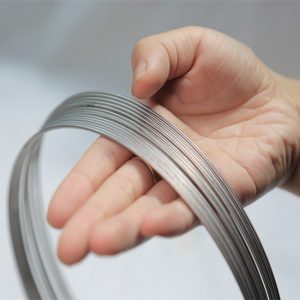
Medical titanium-nickel (Nitinol) guide pins are superelastic, biocompatible surgical instruments used in orthopedics and cardiovascular procedures to guide tools for precise drilling and screw placement. They often meet ASTM F2063 standards for shape memory alloys, offering high durability and flexibility during minimally invasive surgeries
The core material is Nitinol memory alloy, which is used as a high-precision guide device for minimally invasive, interventional, and puncture surgeries in orthopedics.
It is mainly used for intraoperative positioning, puncture, channel establishment, and guiding internal implants.
The Integrated Nitinol Guide Pin is a high-performance surgical instrument designed for orthopedic implant procedures. Manufactured with precision and reliability in mind, this guide pin is essential for accurate guidance and positioning during minimally invasive surgeries. With advanced processing, strict standards, and customizable specifications, it provides surgeons with superior control and patients with safer, less painful treatment.
Specifications
Common Specifications
Φ2.0 (fine guide needle, Kirschner wire type) Φ2.5 (main specification) Φ3.0 (positioning, guiding use) Φ4.0/5.0 (thick positioning needle)
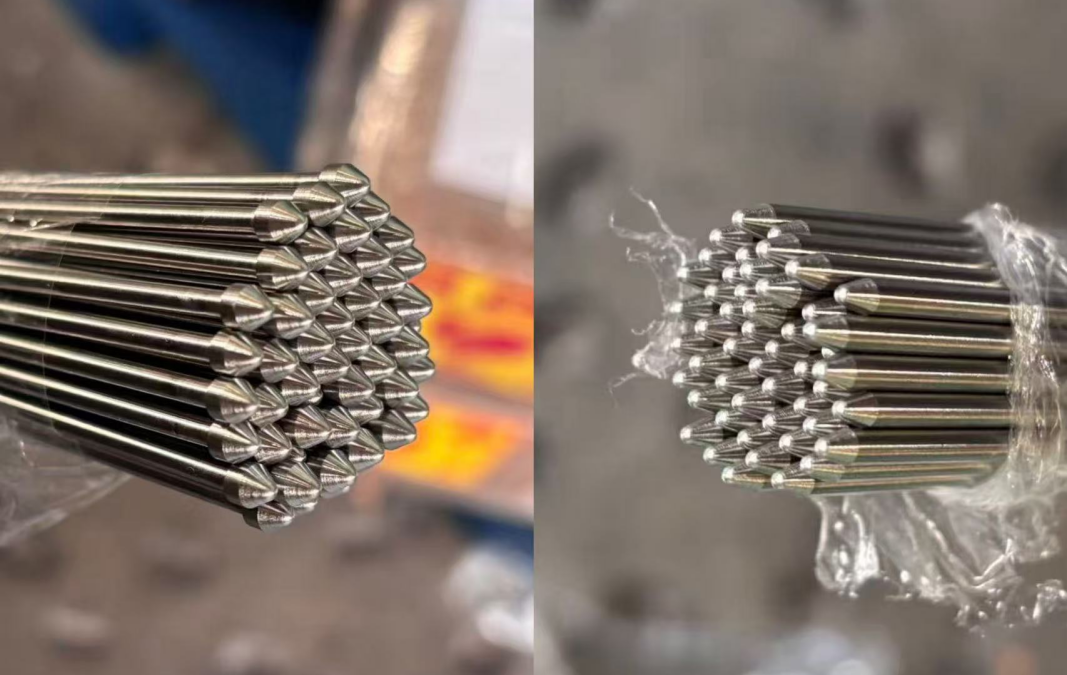
Step-like ball head
Shaft φ2.0 / Ball head φ3.3
Shaft φ2.5 / Ball head φ4.0
Standard:ASTM F2063
Other custom sizes available upon request
High-quality nitinol products with various diameters, tolerances and performances can be customized according to requirements
Design & Customization
The Integrated Nitinol Guide Pin can be manufactured in different shapes and dimensions based on customer requirements. This flexibility ensures compatibility with a wide range of orthopedic implant instruments and surgical techniques.
Nitinol Guide Pin Advantages
Fully Independent Processing – Complete in-house production ensures consistent quality and precision at every stage.
Integrated Design – One-piece manufacturing enhances durability and eliminates weak points.
High Pull-Out Resistance – Tested with resistance greater than 1200 MPa, offering stability and security during procedures.
Key Material Features
Excellent Flexibility – Allows smooth navigation and reduces the risk of breakage.
High Precision Positioning – Ensures accurate guidance for drilling and implant placement.
Clear Radiopacity – Provides sharp imaging for real-time surgical monitoring.
Patient-Friendly Performance – Significantly reduces patient discomfort and increases surgical success rates.
Nitinol Guide Pin Features
Fully Independent Processing – Complete in-house production ensures consistent quality and precision at every stage.
Integrated Design – One-piece manufacturing enhances durability and eliminates weak points.
High Pull-Out Resistance – Tested with resistance greater than 1200 MPa, offering stability and security during procedures.
Why Choose Our Nitinol Guide Pin?
With strong R&D capabilities, strict compliance to international standards, and a commitment to quality, we provide reliable Nitinol guide pins that meet the demands of modern orthopedic surgery. Our products combine durability, precision, and biocompatibility—making them the preferred choice for global medical device manufacturers and hospitals.
Nitinol Guide Pin Application:
- Orthopedics (accounting for approximately 65% of the total number of ball head guide pins)
Vertebral augmentation / Posterior Vertebral Kyphoplasty (PVP/PKP): The ball head guide pin precisely punctures the pedicle of the vertebra, avoiding puncturing the posterior wall of the vertebra / spinal canal. It is a standard procedure for the surgery. - Spinal pedicle screw placement: Precise open approach under robot / navigation, reducing the risk of nerve injury.
Minimally invasive reduction of limb fractures (MIPO): Kirschner wire guidance, intramedullary nail positioning, reducing soft tissue dissection.
Arthroscopy / Sports medicine: Guidance for cruciate ligament reconstruction, rotator cuff repair. - Interventional (accounting for approximately 25%)
Peripheral vascular / Nerve intervention: Ball head super-smooth guide pin passes through tortuous blood vessels, reducing the risk of dissection / perforation.
Tumor ablation / Particle implantation: Precise positioning, protecting surrounding normal tissues.
- Others (approximately 10%) Dental implant positioning, biopsy puncture, minimally invasive urology, etc.