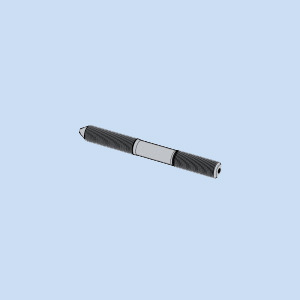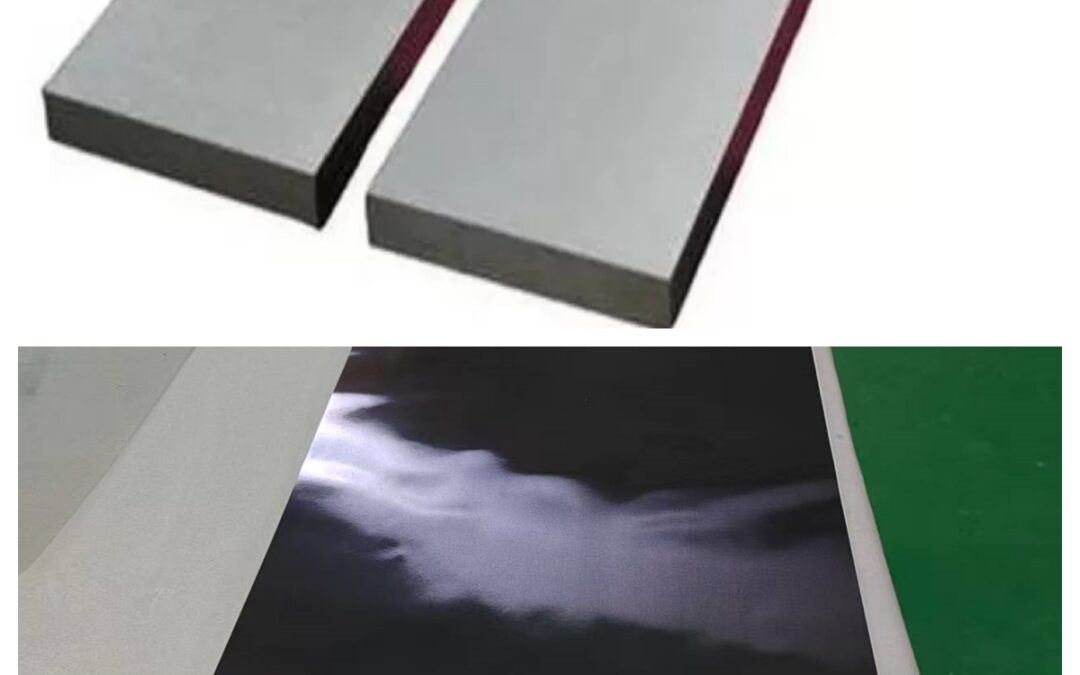
Tantalum-tungsten (Ta-W) alloys are high-performance refractory metals combining tantalum’s corrosion resistance with tungsten’s strength, featuring melting points around 3000°C, density of 16.7–16.9g/cm3and high tensile strength 550MPa for 7.5% W). They are utilized in harsh environments, such as chemical processing, furnace components, and aerospace turbine blades, for superior heat resistance, creep resistance, and durability.
Key Alloy Types and Properties
- Ta-2.5%W (Tantaloy 63):Excellent corrosion resistance with increased strength over pure tantalum, used in heat exchangers and piping.
- Ta-7.5%W (Tantaloy 61):High resilience modulus while maintaining high-temperature strength.
- Ta-10%W (Tantaloy 60):Higher strength and creep resistance,, although less ductile than 2.5%W variants.
- Characteristics:These alloys possess a high melting point (approx. 3080°C), exceptional corrosion resistance (especially to acids), and good wear resistance.
Our Tantalum Tungsten Alloy Range
Tantalum Tungsten Foil
Materials: R05252 (Ta-2.5W), R05255 (Ta-10W)
Standard: ASTM B708-98
Thickness: 0.03-0.07 mm
Width: 30-200 mm
Length: >50 mm
Tantalum Tungsten Sheet & Plate
Materials: R05252 (Ta-2.5W), R05255 (Ta-10W)
Standard: ASTM B708-98
Thickness: 0.07-20 mm
Width: 30-1000 mm
Length: 30-3000 mm
Tantalum Tungsten Rod & Bar
Materials: R05252 (Ta-2.5W), R05255 (Ta-10W)
Standard: ASTM B365-98
Diameter: 4-150 mm, Length: 30-3000 mm
Height: 1-20 mm, Width: 10-100 mm, Length: 30-3000 mm
Tantalum Tungsten Tube
Materials: R05252 (Ta-2.5W), R05255 (Ta-10W)
Standard: ASTM B521-98
Outer diameter: 2-120 mm
Wall thickness: 0.5-5 mm
Length: 200-3000 mm
Tantalum Tungsten Wire
Materials: R05252 (Ta-2.5W), R05255 (Ta-10W)
Standard: ASTM B365-98
Diameter: 0.25-4 mm
Customization: Sizes, Thickness, and Finish Options
Your needs are unique. That’s why we offer customization. Choose from a range of sizes and thicknesses.
We also provide various finishes. Whether you need a polished surface or a specific texture, we have it.
Composition of Tantalum Tungsten Alloy
| Chemical Composition (%) | |||||||||||||
| Grade | Main Content | Impurities (≤%) | |||||||||||
| Ta | Nb/W | Fe | Si | Ni | W | Mo | Ti | Nb | O | C | H | N | |
| Ta1 | Remainder | —— | 0.005 | 0.005 | 0.002 | 0.01 | 0.01 | 0.002 | 0.03 | 0.015 | 0.01 | 0.0015 | 0.01 |
| Ta2 | Remainder | —— | 0.03 | 0.02 | 0.005 | 0.04 | 0.03 | 0.005 | 0.1 | 0.02 | 0.01 | 0.0015 | 0.01 |
| TaNb3 | Remainder | <3.5 | 0.03 | 0.03 | 0.005 | 0.04 | 0.03 | 0.005 | —— | 0.02 | 0.01 | 0.0015 | 0.01 |
| TaNb20 | Remainder | 17~23 | 0.03 | 0.03 | 0.005 | 0.04 | 0.03 | 0.005 | —— | 0.02 | 0.01 | 0.0015 | 0.01 |
| Ta2.5W | Remainder | 2.0~3.0 | 0.005 | 0.005 | 0.002 | 3 | 0.01 | 0.002 | 0.04 | 0.015 | 0.01 | 0.0015 | 0.01 |
| Ta10W | Remainder | 9~11 | 0.005 | 0.005 | 0.002 | 11 | 0.01 | 0.002 | 0.04 | 0.015 | 0.01 | 0.0015 | 0.01 |
| Other details per customer’s request | |||||||||||||
Tantalum Tungsten Sheet
Tantalum tungsten foils and plates are supplied by XOT METALS. Measured mechanical strength and conductivity data meet industry standards. The materials function in extreme environmental conditions and high-performance electronics, consequently addressing technical requirements. They satisfy assessed technical parameters and provide defined solutions.
Tantalum Tungsten Sheet & Tantalum Tungsten Board Description
Tantalum Tungsten is a metal alloy with high strength. It exhibits a high melting point, tensile strength and corrosion resistance. The Tantalum alloys from SAM are produced using powder metallurgy techniques, whereby tantalum powder is mixed with alloying elements and filled into moulds, pressed at up to 2 000 Bar and subsequently sintered. Tantalum Tungsten alloys are stronger than pure tantalum and are suitable for corrosion and heat applications at temperatures up to 1 600 °C, which qualifies them for sheet applications.
Tantalum Tungsten Sheet & Tantalum Tungsten Board Specification
Condition: Annealed
| Size: | Thickness: 0.07–10 mm Width: 30–1 000 mm Length: 30–3 000 mm |
| Material | UNS R05255, UNS R05252 |
| Standard | ASTM B708 |
| Purity | ≥99.95% or 99.99% |
Chemical Composition
| Element | R05255 (Ta10W) (%, Max) | R05252 (Ta2.5W) (%, Max) |
| C | 0.01 | 0.01 |
| O | 0.015 | 0.015 |
| N | 0.01 | 0.01 |
| H | 0.0015 | 0.0015 |
| Fe | 0.01 | 0.01 |
| Mo | 0.02 | 0.02 |
| Nb | 0.1 | 0.5 |
| Ni | 0.01 | 0.01 |
| Si | 0.005 | 0.005 |
| Ti | 0.01 | 0.01 |
| W | 9.0–11.0 | 2.0–3.5 |
Tantalum and Tantalum Alloy
- R05200, unalloyed tantalum, produced using electron beam furnace or vacuum arc melting or both
- R055400, unalloyed tantalum, produced by powder metallurgy consolidation.
- R05255, Ta-W alloy, 90% tantalum, 10% tungsten, produced using electron beam furnace or vacuum arc melting or both
- R05252, Ta-W alloy, 97.5% tantalum, 2.5% tungsten, produced using electron beam or vacuum arc melting or both
- R05240, Ta-Nb alloy, 60% tantalum, 40% niobium, produced using electron beam furnace or vacuum arc melting.
Tantalum Tungsten Sheet & Tantalum Tungsten Board Application
- Aerospace: In the aerospace sector, Tantalum Tungsten Sheets and Boards are used for manufacturing high-temperature components and structural materials for engines. The components operate at temperatures up to 1 600 °C and under high pressures. This material is verified for performance under these conditions.
- Nuclear Industry: Tantalum Tungsten Sheets and Boards are used in the construction and operation of nuclear reactors. They are employed in the production of fuel cladding, control rods and other components subject to high radiation and temperature. Their radiation and corrosion resistance ensures safe reactor operation.
- Electronics Industry: Tantalum Tungsten Sheets and Boards are used owing to their effective electrical and thermal conductivity in the electronics industry. They are employed in the manufacturing of capacitors, resistors, electrodes and other electronic components. They are also used for the production of connection wires and contact points for electronic vacuum devices and high-temperature equipment, thereby ensuring proper operation in elevated temperature environments.
- Chemical and Metallurgical Industry: In chemical and metallurgical processes, Tantalum Tungsten Sheets and Boards are utilised for handling corrosive media and molten high-temperature metals. Their corrosion resistance and high-temperature stability render them suitable for applications in reactors, pipes and containers.
- Medical Devices and Biotechnology: Tantalum Tungsten alloy sheets are used in certain medical devices and biotechnological applications owing to their biocompatibility and corrosion resistance. They are employed in the manufacturing of components for implantable medical devices, such as artificial joints and dental implants, as well as in equipment for biological research.
Manufacturing Processes for Tantalum Tungsten Alloy (Reduction Method)
1. Powder Mixing
Mix ultra-fine tantalum powder and tungsten powder in the required proportions, then blend the mixture evenly in a drum-type mixer to obtain a uniform mixed powder.
2. Press Molding
Load the fine powder into the mold and press it into shape.
3. Sintering
Place the alloy rods in a vacuum sintering furnace, apply vacuum heating to sinter and obtain rough ingot blanks.
4. Melting
Melt the rough ingots multiple times using a vacuum electron beam furnace or vacuum arc furnace to produce alloy ingots.
5. Improving Finished Ingot Properties
Place the alloy ingot blanks in a high-frequency furnace, heat and forge multiple times, and process the surface oxide layer to produce finished ingots.
6. Forge
Cut and forge the billet according to the size and weight of the profile.
7. Rolling & Annealing
Repeatedly roll or forge, followed by multiple vacuum annealings to obtain rods or plates.
8. Machining and Polishing
Finally, through machining and polishing, achieve high-performance tantalum-tungsten alloy finished plates and rods.
Tantalum Tungsten Alloy: A Comprehensive Guide for Buyer
What is Tantalum Tungsten Alloy? A Brief Overview
Tantalum-tungsten alloy is a tough and long-lasting material made by mixing tantalum and tungsten. Tantalum makes it flexible and resistant to rust, while tungsten makes it very strong and able to withstand high temperatures.
This alloy is often used in making parts for airplanes, chemical tools, and medical devices because it can handle tough conditions like high heat and wear. It’s great for jobs where you need something that lasts a long time and doesn’t break down easily. Its unique properties make it ideal for harsh environments and demanding applications.
Unique Properties of Tantalum Tungsten Alloy
High Density and Hardness:
The alloy’s significant density and hardness make it resistant to wear and tear, contributing to its long service life.
Outstanding Corrosion Resistance:
It exhibits superior resistance to corrosion, even in aggressive chemical environments, ensuring longevity and durability.
Exceptional Melting Point:
The alloy maintains structural integrity under extreme temperatures, making it suitable for high-heat applications.
Ductility:
Despite its strength, the alloy remains ductile (flexible), a quality contributed by tantalum.
Efficient Thermal Conductivity:
This property is critical for applications requiring efficient heat dissipation.
Stable Electrical Characteristics:
The alloy’s consistent electrical properties make it highly reliable for use in electronic applications.
Quality Control: Tantalum Tungsten Alloy Testing
Making sure tantalum tungsten alloy is of top quality is very important because it’s used for important jobs in many industries. Quality checks and tests are a big part of making the alloy. Let’s look at the main ways we test and control the quality of tantalum alloy:
Visual Inspection:
Surface Check: Each product is visually inspected for any surface imperfections such as scratches, pits, or irregularities. Dimensional Accuracy: The thickness, width, and length of the alloy are measured to ensure they meet specified tolerances.
Chemical Analysis:
Purity Testing: To confirm the chemical composition and purity of the tantalum, tests like X-ray fluorescence (XRF) and inductively coupled plasma (ICP) are conducted. Trace Elements Analysis: Identifying trace elements is crucial to ensure the alloy’s suitability for sensitive applications, especially in electronics and medical fields.
Mechanical Property Testing:
Tensile Strength Test: Determines the alloy’s strength by measuring its resistance to breaking under tension. Elongation Measurement: Assesses the ductility of the alloy, or how much it can stretch before breaking.
Non-Destructive Testing (NDT):
Ultrasonic Testing: Ultrasonic waves are used to detect internal flaws or inhomogeneities. Radiographic Testing: X-rays or gamma rays are used to inspect the internal structure of the tubes, identifying any internal defects.
Corrosion Resistance Testing:
The product is exposed to various corrosive agents to ensure its resistance, a key property for its use in chemical processing and medical devices.
Thickness Measurement:
Using micrometers or other precise instruments, the exact thickness of the product is verified, as it is a critical factor in many applications.
Certification and Documentation:
After passing all tests, the product is certified. A report is provided to the buyer detailing the tests conducted and their results, ensuring traceability and quality assurance.