
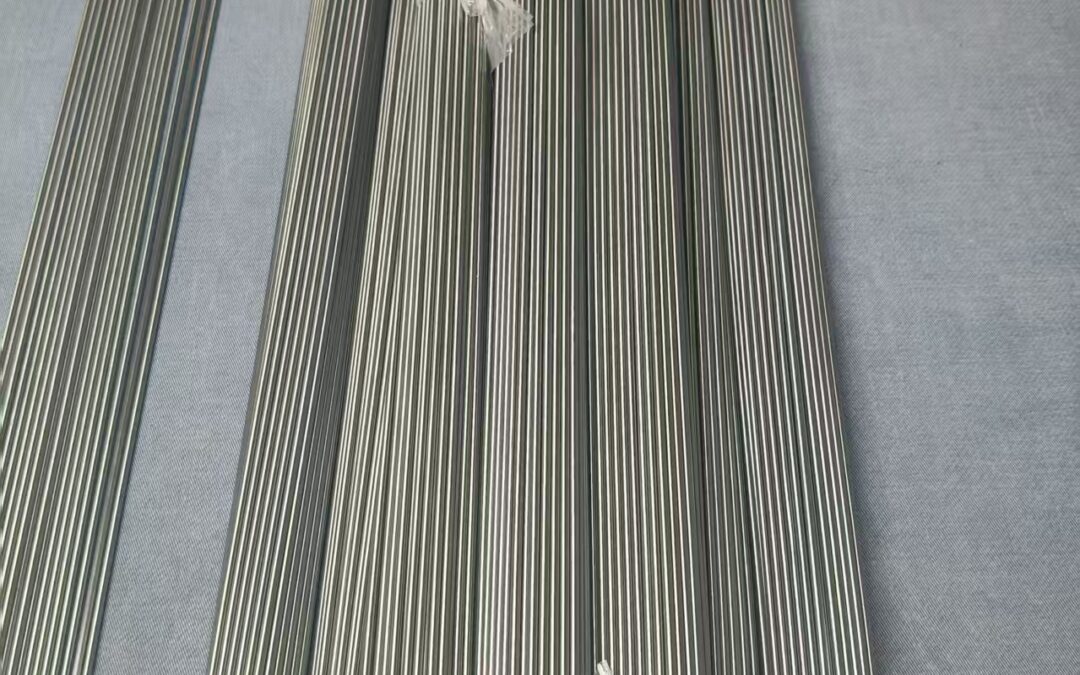
A shop running an LGK-60 swapped hafnium electrode cores for zirconium ones and figured the consumables line would drop a few thousand a year. Three months later the half-empty box went back to the supplier. Cut faces were coming out with heavy dross, the arc kept dropping out on longer runs, and one tip burned through the copper seat hard enough to kill two hours and send a stack of plate to rework.
That story is common enough that plenty of people in plasma cutting now say zirconium electrodes don’t work. The more accurate version is that zirconium works inside a narrow window, and most of the failures happen outside that window, or happen because the wire in the box was never clean zirconium to begin with.
Why it can stand in at all
An air plasma cathode works by holding a thin, semi-conductive oxide layer on the metal at high temperature. That layer drops the work function far enough that the tip keeps emitting electrons instead of simply melting. Hafnium and zirconium sit next to each other in group IVB and both build that kind of layer, which is the entire basis for the zirconium electrode cores on the market. It is a real substitution. It is also a narrower one than the price difference suggests.
| Property | Hafnium | Zirconium |
| Melting point | 2233 °C | 1855 °C |
| Density | 13.3 g/cm³ | 6.5 g/cm³ |
| Effective work function | ≈2.7–2.8 eV | ≈2.9–3.0 eV |
| Price, same size wire | baseline | 25–40% lower |
| Current it will hold long-term | 100–120 A+ | 80 A ceiling, 60–70 A realistic |
Where it holds up
Under 60 to 70 amps, intermittent work, thin plate in the 3 to 8 mm range, torch in hand, cutting scrap. Users report those setups strike reliably and get the job done. The P80 consumables sold with zirconium cores are usually labeled contact-cut or rough-cut, which tells you what the maker thinks they are for. If your electrode spend matters more than your finish does, and you can live with changing tips more often, zirconium saves money.
Where it falls apart
Melting point first. 1855 °C against 2233 °C is 378 degrees of headroom you no longer have. Zirconium starts oxidizing noticeably around 700 °C, and the ZrO₂ that forms thickens and cracks and spalls in a way HfO₂ does not. Once that scale breaks up, the steady emission the cathode depends on goes with it.
Then erosion. At the tip, where local temperature passes 2000 °C, zirconium loses volume at roughly 1.8 to 2 times the rate hafnium does. Same current, same air, shorter life, and the loss does not scale linearly with how hard you push it.
Work function is a little higher too, 2.9 to 3.0 eV against 2.7 to 2.8. You feel that as a pilot arc that stutters before it catches, an arc root that wanders instead of sitting where you put it, rougher faces, more dross, and random arc-outs the moment you raise current.
Heat capacity is the one that catches production shops. Density of 6.5 g/cm³ against 13.3 means a zirconium wire of the same diameter simply holds less heat. On a long continuous cut it overheats, spits, and in bad cases takes the copper seat with it. That is why zirconium is a poor fit for CNC tables and anything sustained above 80 A, and why the OEM manuals from Hypertherm, Lincoln and Thermal Dynamics still list hafnium as the standard consumable for air and oxygen plasma cutting.
The part that never makes it onto the datasheet
Most of the cheap zirconium wire out there is not high-purity zirconium. It carries impurities, and zirconium grabs oxygen and nitrogen aggressively, so how the wire was drawn, how it sat in storage, and how it was handled before it went into the torch all change how long it lasts. Two boxes with identical spec sheets can behave like two different materials.
Which puts the honest advice somewhere between the two camps. Not “zirconium is junk,” and not “zirconium is fine.” More like: if you are going to run zirconium, buy it from someone who will state the purity and stand behind the lot.
Where XOT Metals fits
That is more or less the position XOT Metals occupies. They are a specialty metal and machined parts manufacturer in China, organized into three operations.
One is a fastener and engineered parts base with 500 square meters of warehouse stock: DIN, ISO, ANSI and JIS titanium bolts and nuts, around 20 tons ready to ship. One is a wire base built with support from the Nonferrous Metals Institute of Northwest, running NbTi47, Nitinol and titanium alloys such as Ti38644, Ti62642, Ti15333 and Ti811, with no minimum order on wire. The third is refractory metals, covering niobium, tantalum, molybdenum, tungsten, zirconium and hafnium in bar, sheet and made-to-print form.
For electrode work, the third line is the useful one. Hafnium and zirconium come out of the same supplier, so you can compare the two on purity and lot-to-lot consistency instead of gambling across two unrelated channels. The wire base matters more than it looks, too. Drawing NbTi and Nitinol to medical and MRI tolerances is not casual work, and a shop that can hold those specs is a better bet for a material as oxygen-hungry as zirconium.
They also keep sales agents and warehouse stock in Australia, Italy, Iran, Vietnam and Spain, which shortens the lead time if you are not ordering direct from China.
A short list to check before you buy
- Under 60 A, thin plate, hand torch, scrap. Zirconium is reasonable and it is cheaper.
- 80 A and up, continuous, CNC. Hafnium.
- Cuts that have to be right the first time. Hafnium.
- Thick plate piercing, where the tip takes a thermal shock on every hole. Hafnium.
- Wet or oily compressed air. Fix the air first. Zirconium oxidizes faster, and no electrode survives bad air for long.
| Zirconium is an economy option for light duty. It was never a drop-in replacement for hafnium, and the shops that got burned usually found that out on a machine that was working harder than the electrode was built for. |